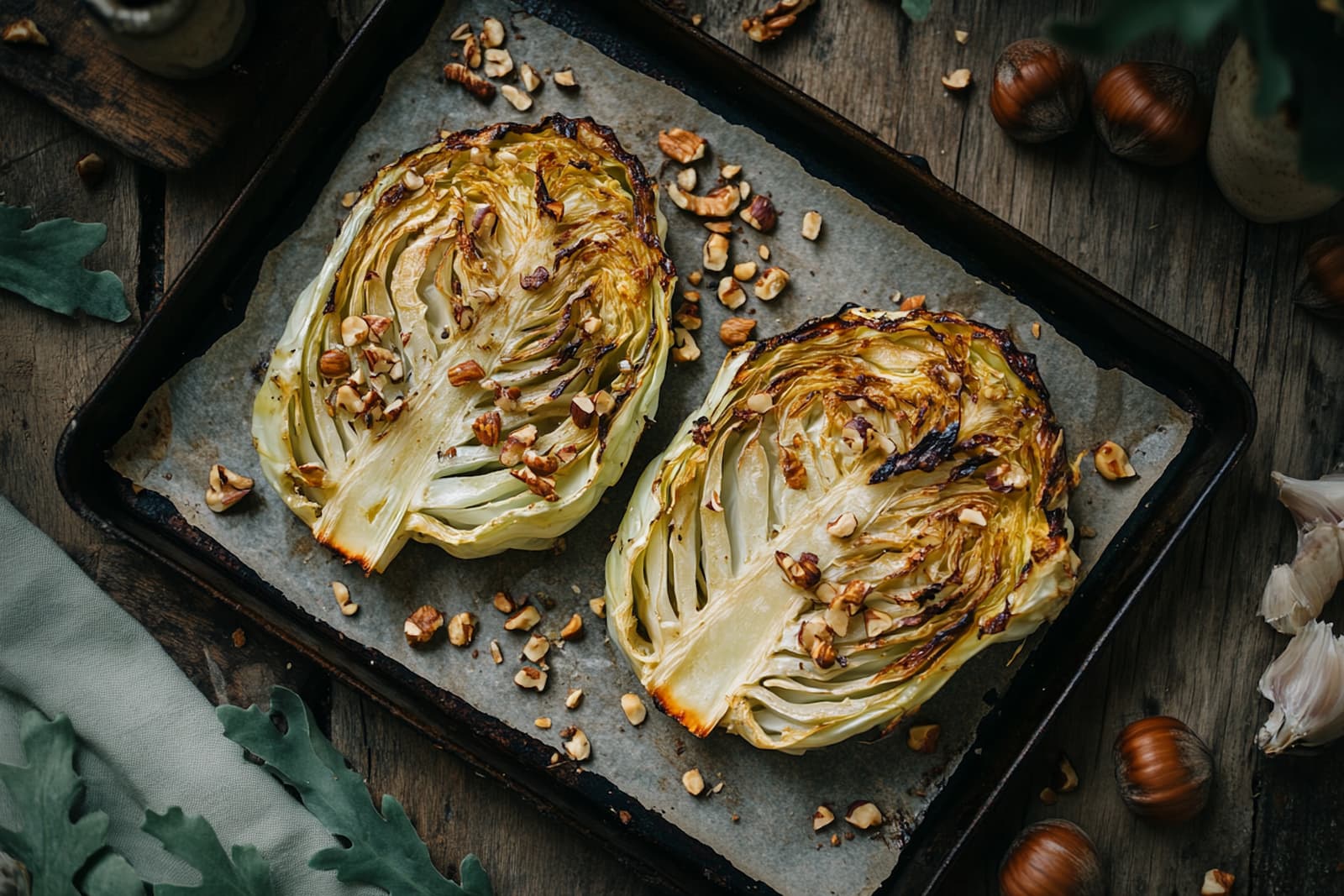
A whole head, cut straight through and roasted in a very hot oven right up to the edge of too far. Underneath, yoghurt with enough herbs in it to turn green.
Cabbage usually gets made small: shredded, boiled, sliced into ribbons until nothing of it is left. The interesting part only happens when you leave it big. A slice three centimetres thick behaves like two dishes at once — the thin leaf edges go dark, brittle and smoky, while the core stays juicy and turns sweet.
The rest is contrast. The herb yoghurt has to be cold, sharp enough, and carry noticeably more herbs than feels sensible while you are chopping them. Then a few toasted hazelnuts on top, so that it crunches in two different places.
Serves 2 as a main with bread — or 4 as a starter if you halve the slices.
Heat the oven to 220 °C conventional (200 °C fan) and line a tray with baking paper. The oven has to be genuinely hot before the cabbage goes in.
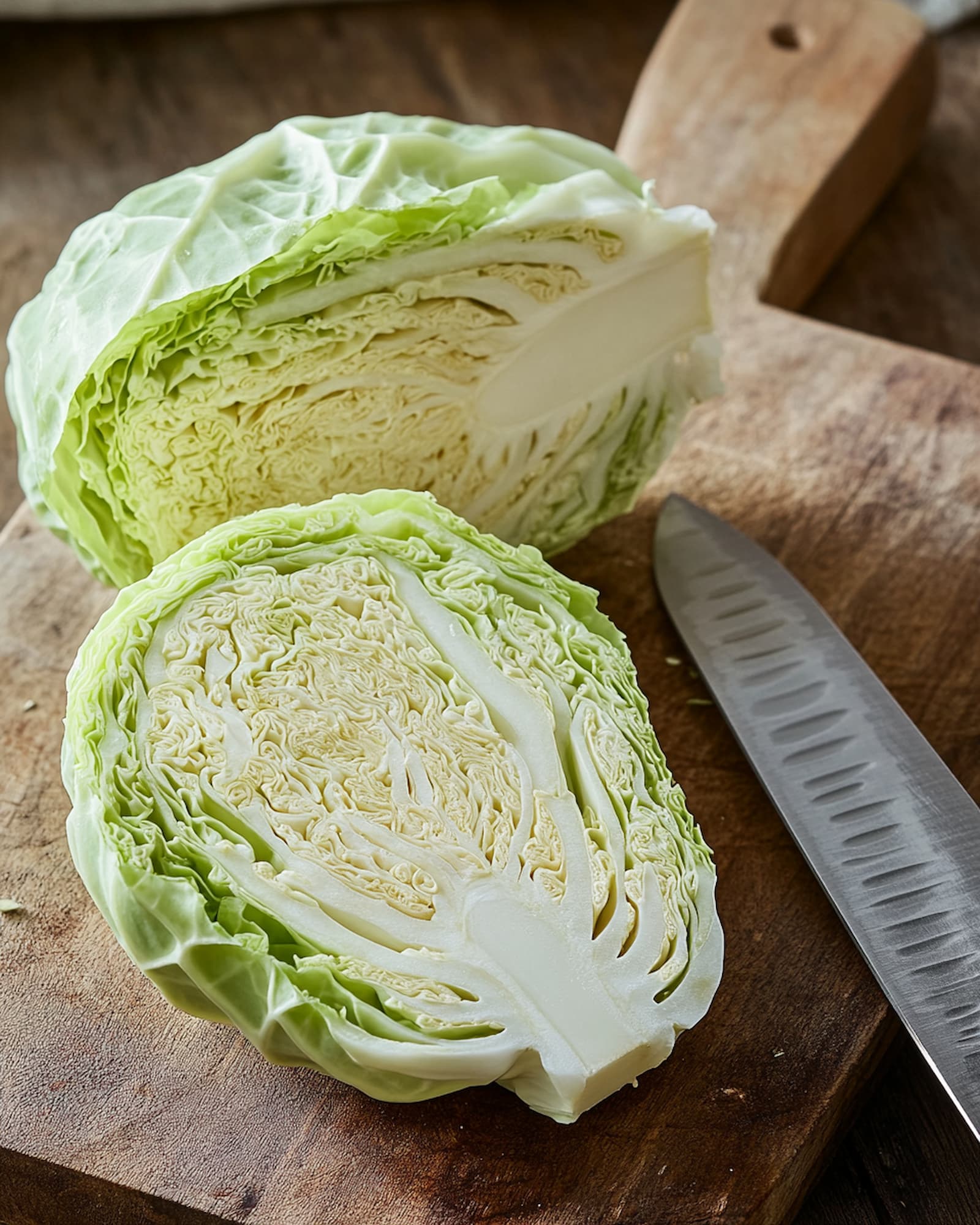
Pull off the wilted outer leaves. Do not cut out the core — it holds the slices together. Using a large knife, cut the head from top to bottom into slices 2.5 to 3 cm thick.
One head gives three or four whole slices. Whatever falls apart at the edges goes on the tray anyway and turns into crisps.
Mix the olive oil with the crushed garlic, caraway, paprika, salt and pepper. Brush the slices generously on both sides, working some of it between the leaf layers.
Roast for 20 minutes, then turn carefully with a wide spatula. Roast another 15 to 20 minutes, until the edges are dark brown and dry. Brush with the maple syrup for the last 5 minutes.
Darker than feels right. That is exactly where the flavour sits.
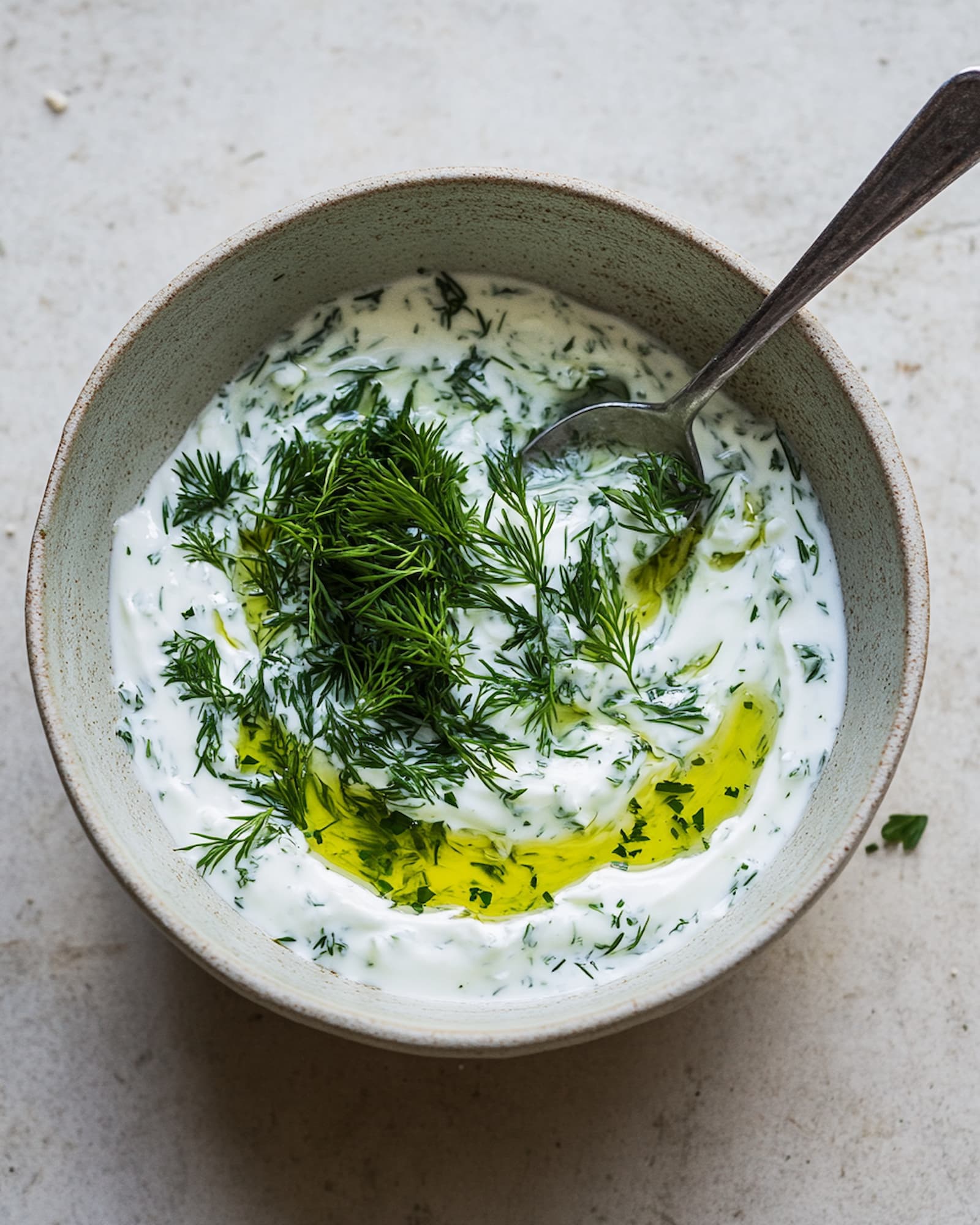
Meanwhile chop all the herbs finely and stir into the yoghurt with lemon zest, lemon juice, grated garlic, olive oil and salt. Leave it for 10 minutes, then taste again.
Toast the hazelnuts in a dry pan until they smell nutty, cool briefly and chop roughly.
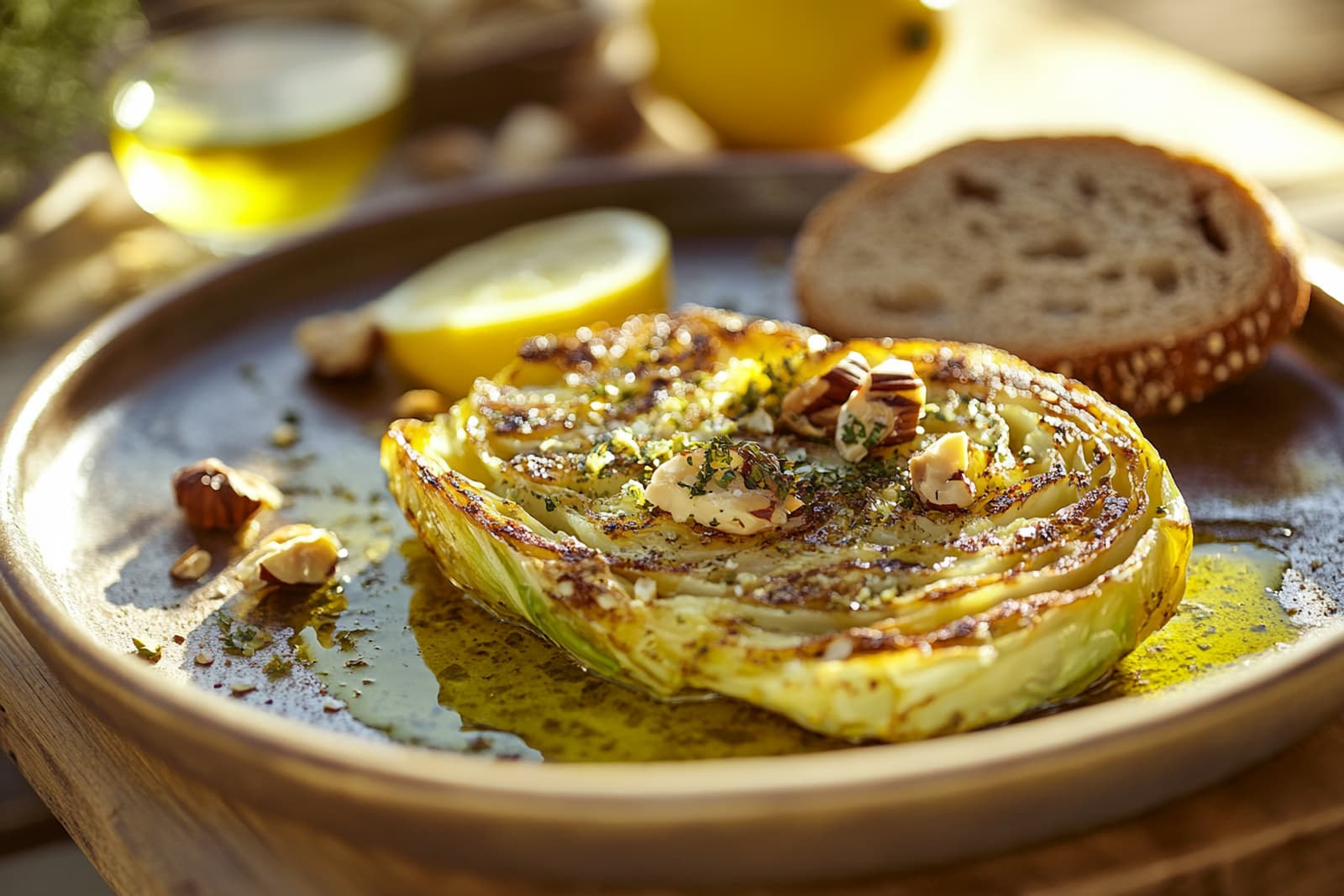
Spread the yoghurt across the plates and set the cabbage steaks on top. Finish with nuts, a little lemon zest, flaky salt and one last drizzle of olive oil.
Nikolas Thiele
Has cooked this recipe for three autumns running. Most recently in October.