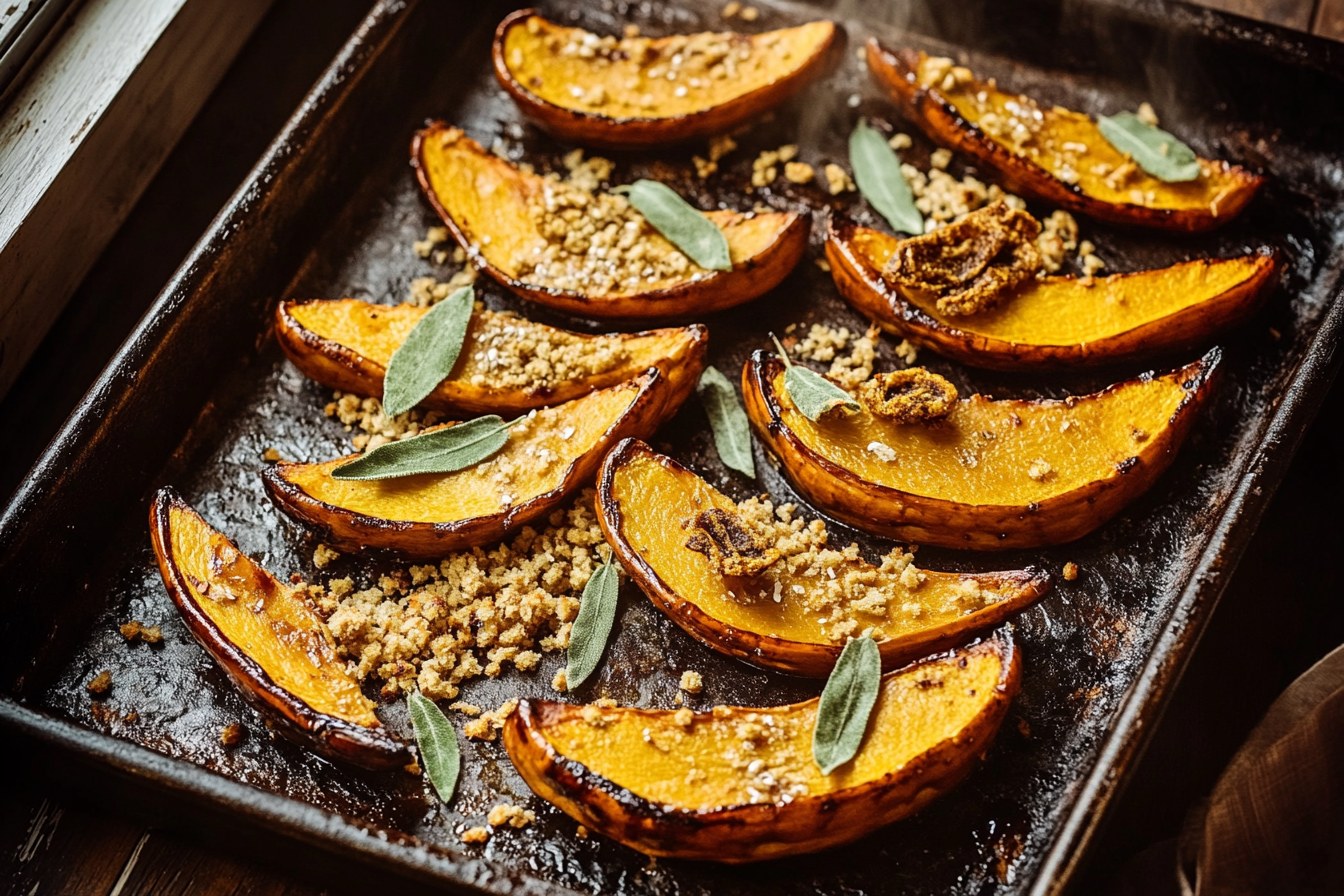
Thick wedges with room to breathe on a very hot tray, and crumbs torn from yesterday's rye bread. No purée, no cream — the contrast comes out of the pan.
Pumpkin nearly always ends up in the blender, and there is a fair reason for that: out of the oven it often comes back pale, soft and watery. Pull one tray of washed-out wedges and you go back to soup next time. The fault is not the pumpkin though, it is how full the tray was — packed close together, the steam coming off the pieces has nowhere to go, and they cook in their own moisture.
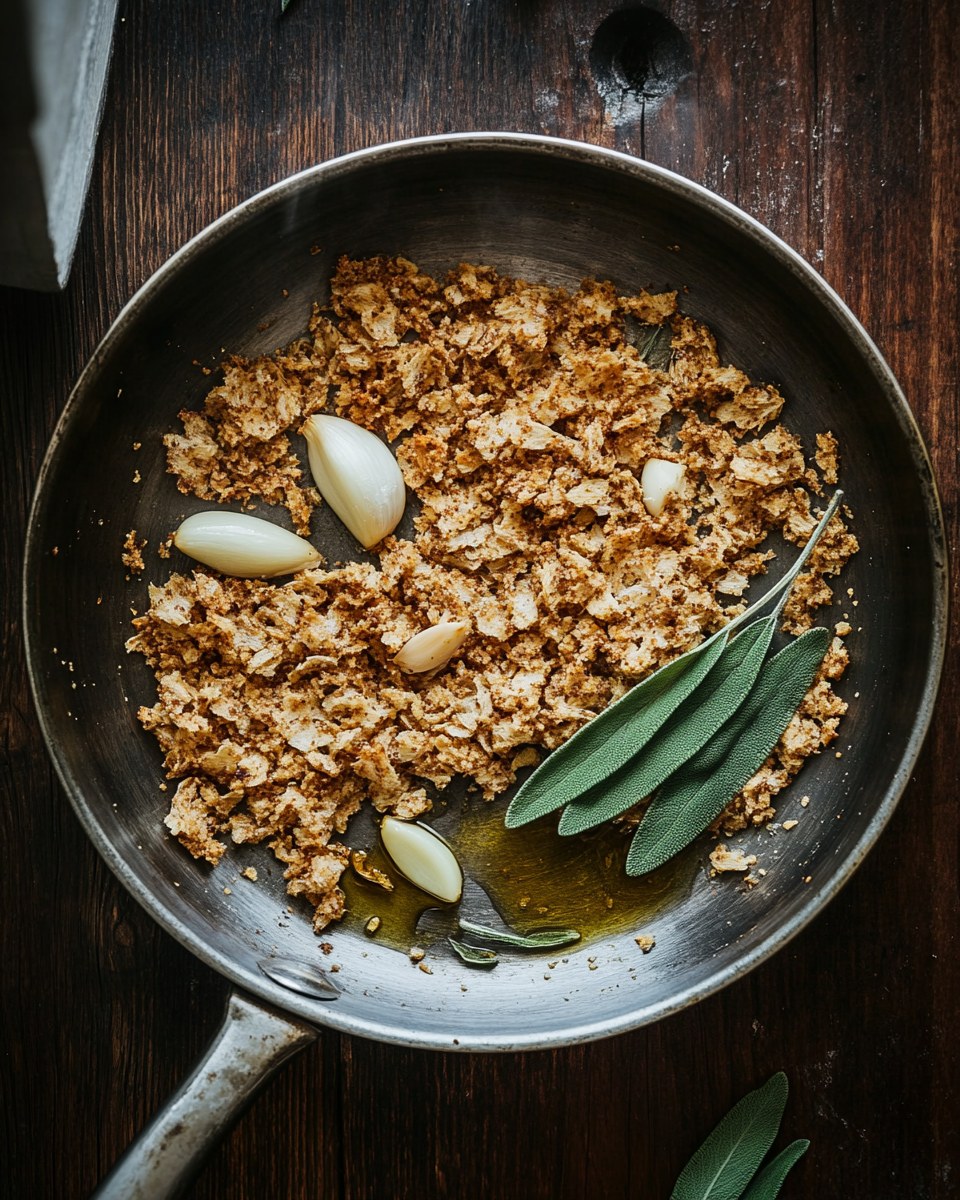
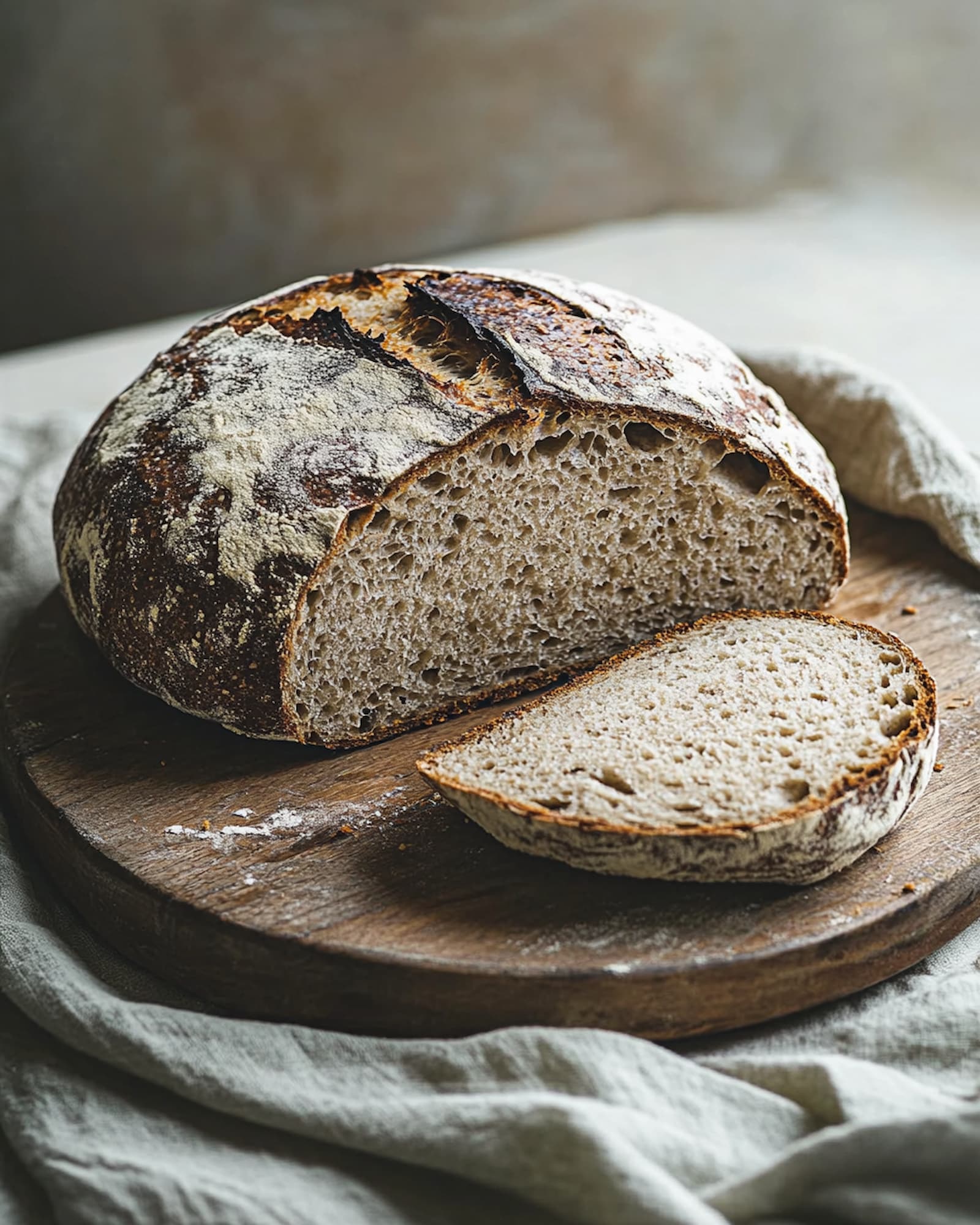
This recipe turns both around: high heat, a tray preheated with the oven, and at least a finger's width between the wedges. Then a second texture that costs nothing — day-old rye bread torn into coarse crumbs and fried dark brown in oil with garlic and sage. The bread brings the edge that pumpkin does not have on its own.
Eight ingredients — oil and salt appear twice because they are used in two places. Serves 2 as a main with bread, or 4 as a side. Keep the crumbs in a separate jar, otherwise they go soft overnight.
Heat the oven to 220 °C conventional (200 °C fan). Slide an empty lined tray in at the same time and let it heat through.
The hot tray is half the trick. The cut faces start browning straight away instead of shedding water first.
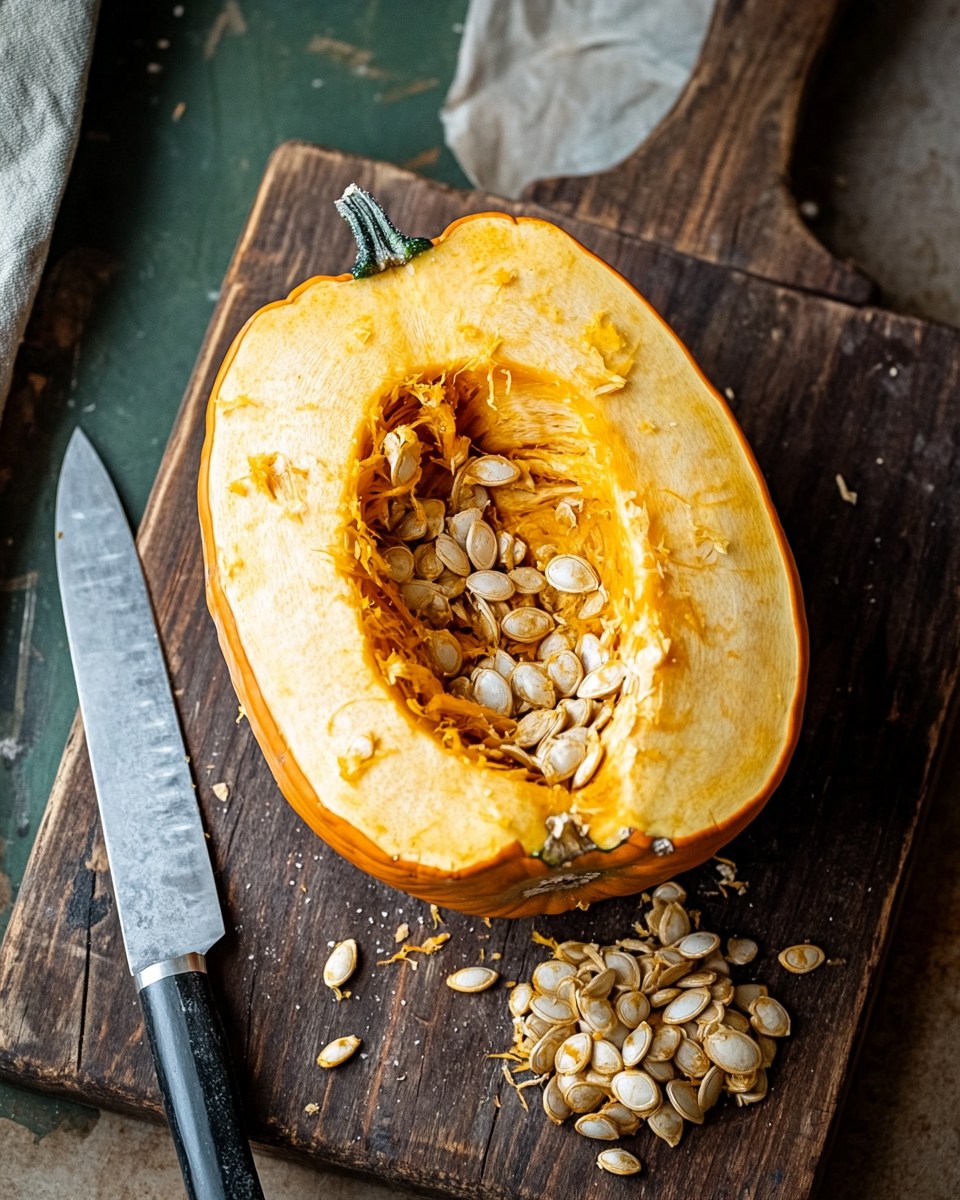
Halve the pumpkin and scrape out the seeds with a spoon. Cut each half into wedges 2 cm thick. The skin stays on.
Hokkaido skin goes soft and holds the wedge together. On butternut or crown prince it has to come off.
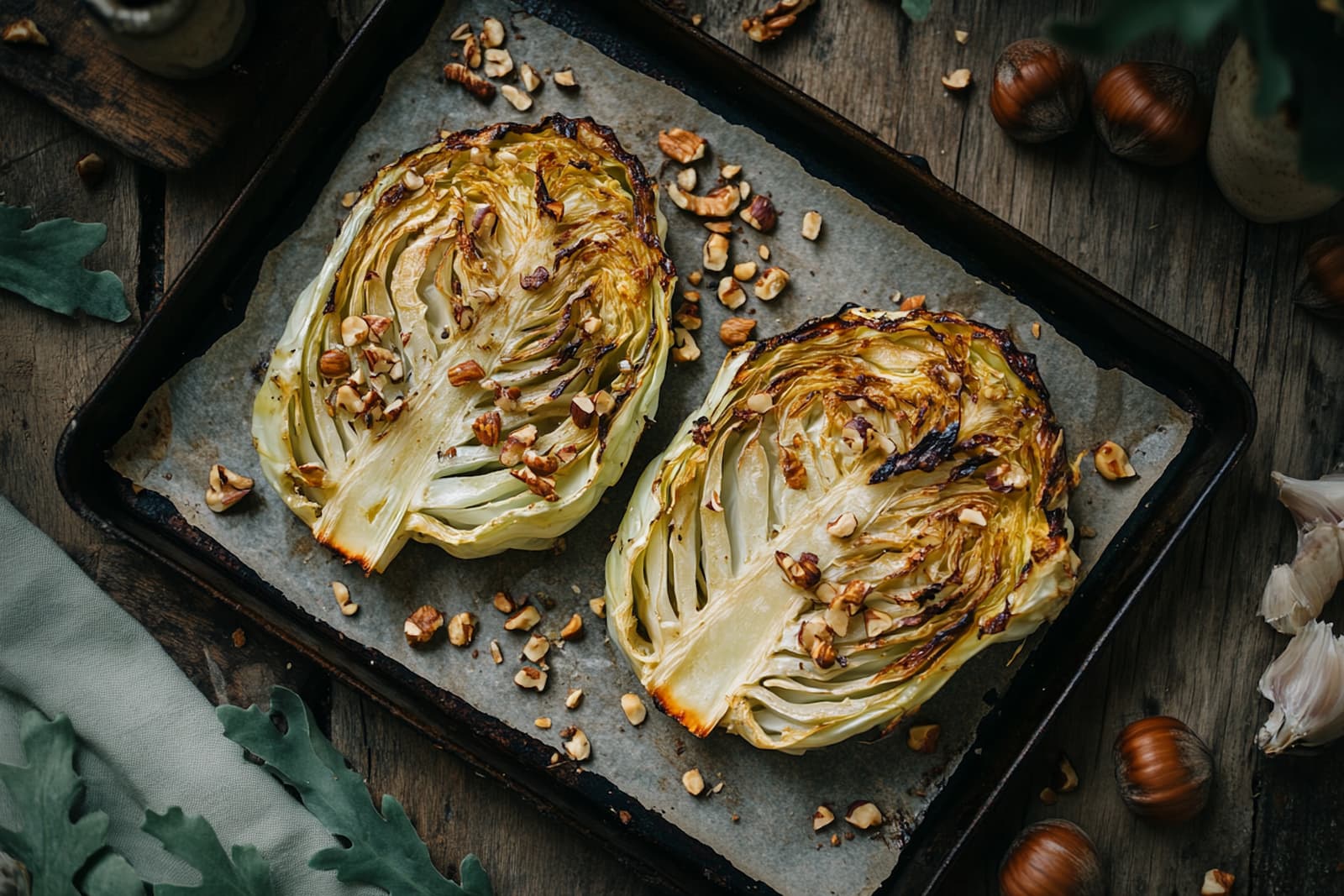
Toss the wedges with the olive oil, salt and pepper listed for the pumpkin until every surface is glossy. Lay them on the hot tray, one cut face down, with at least a finger's width between them.
Roast for 25 to 30 minutes, turning once after about 18 minutes. They are done when the edges are dark brown and the thin tips curl slightly.
Depending on variety and thickness it can take five minutes longer. Go by the look, not the clock.
Meanwhile tear the rye bread into coarse crumbs — pea-sized and deliberately uneven. Hands do this better than a blender, which grinds everything to the same fineness.
Heat the olive oil for the crumbs in a pan over medium heat and fry them for 4 to 6 minutes, until they are dark brown and sound dry as you stir. Add the sliced garlic and the sage for the last minute and season with the remaining salt.
Lay the pumpkin out on a platter, sprinkle the cider vinegar over it and scatter the hot crumbs on top. Straight to the table.
The vinegar goes on the pumpkin, not the crumbs — otherwise they soften at the exact moment they are ready.
The most common mistake is not the temperature, it is how much goes on the tray. Pumpkin is mostly water. With the wedges close together the steam they give off sits between them and cannot escape — so they cook in their own moisture and go soft without ever browning. Two half-filled trays beat one full tray, even though it looks like twice the work.