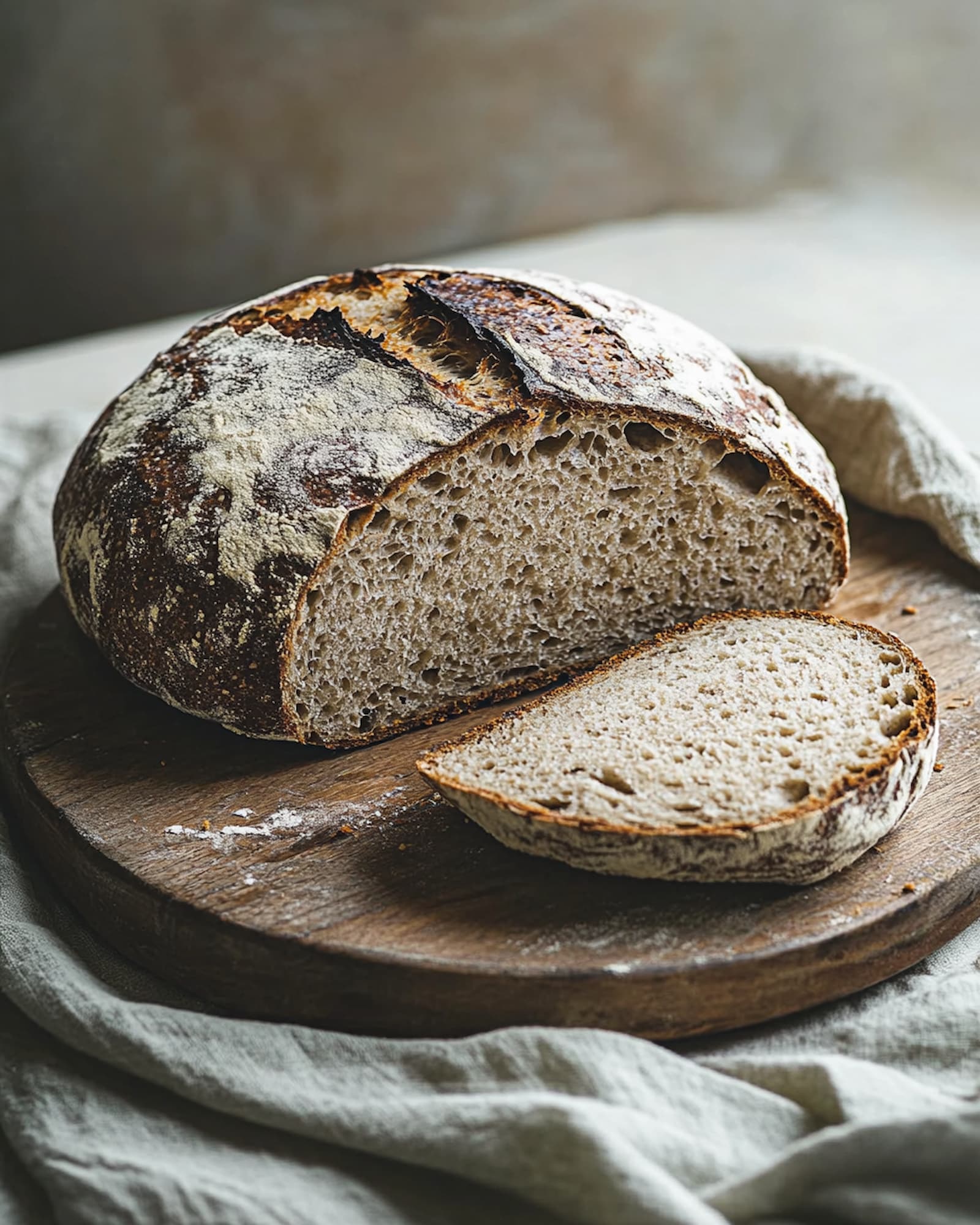
Eighteen hours of time replace ten minutes of kneading. A lidded pot replaces the baker's oven. Nothing else is needed.
Bread baking fails for most people at the kneading — too short, too long, too impatient. And yet the step can be skipped entirely. Gluten networks on its own if you give the dough enough time. Eighteen hours in a cool room does what would otherwise take ten minutes of muscle.
The second trick is the pot. A cast-iron casserole with a lid holds back the steam the bread gives off while baking — exactly what a baker's oven does with its steam injection. Without it you will not get a crust like this.
Makes one loaf of about 800 g. Wrapped in a cloth it keeps four to five days.
Mix both flours, yeast and salt in a large bowl. Add water and vinegar and stir with a spoon until no dry flour is left. The dough is sticky and unattractive — that is correct.
Do not knead. Genuinely, do not.
Cover the bowl and leave for 18 hours at room temperature. It should show bubbles on the surface and have risen noticeably.
Dust the work surface generously with rye flour, slide the dough onto it and fold it twice from the outside in with floured hands. Shape into a ball and set seam-side down on a floured cloth.
Leave covered for another 2 hours. For the last half hour, heat the oven to 240 °C with the empty cast-iron pot and its lid inside.
The pot has to be searingly hot before the dough goes in.
Carefully take out the pot, slide in the dough, put the lid on. Bake 30 minutes covered, then remove the lid and bake another 15 to 20 minutes until the crust is dark brown.
Cool completely on a rack, at least an hour. Cut warm, the crumb turns gummy.
If the crumb stays too dense, the dough was usually standing somewhere too cold. Rye likes warmth — in winter, find it a spot near a radiator.