Red cabbage is not a braising vegetable but a frying one — cut fine enough, it is done in fifteen minutes. The vinegar goes in last, and for two reasons.
Red cabbage has a reputation as a Sunday vegetable. An hour in the pot, cloves, bay, a splash of red wine — and at the end something sweet, sour and soft that is more side dish than dish. That is one way to cook it. It is not the only one, and for a Wednesday evening it is the wrong one.
Cut fine enough, red cabbage behaves in a pan like any other vegetable: it browns, it collapses, and after fifteen minutes it is done. The one thing it hangs on is the order — the vinegar belongs at the end, not the beginning. Why, is in the note below. And a side effect comes free: the cabbage gets its colour back at exactly the moment it goes on the plate.
Eight ingredients, one pan. Serves 2 as a main with bread or 4 as a side. Cold the next day as a salad it is at least as good as fresh.
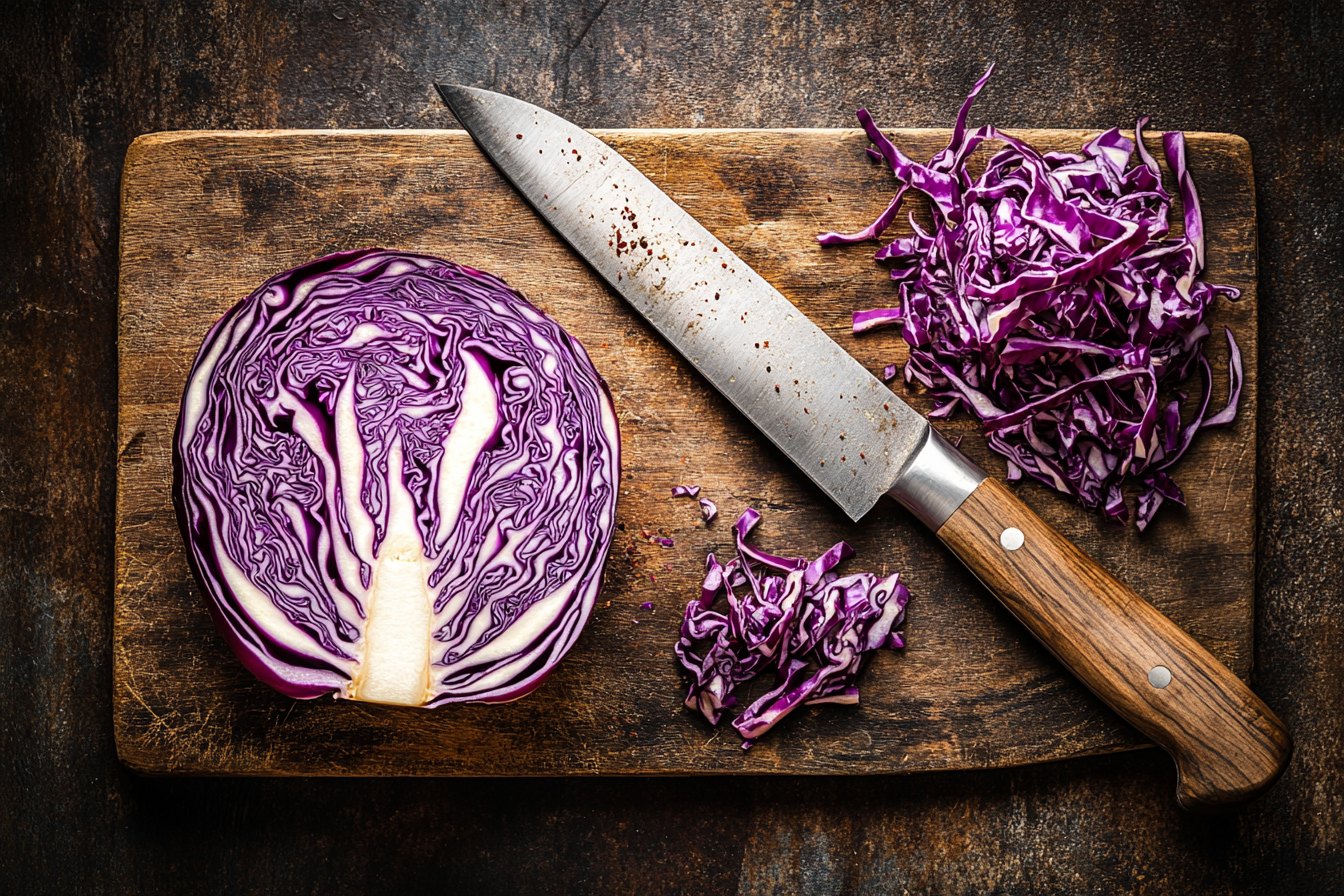
Quarter the red cabbage and cut out the hard core in a wedge. Slice the quarters across into the finest strips you can manage, three to four millimetres wide.
The finer the strips, the shorter the time in the pan. At half a centimetre, fifteen minutes quickly turns into forty.
Slice the onion into fine rings. Quarter the apple with its skin on, remove the core and cut the quarters into thin wedges.
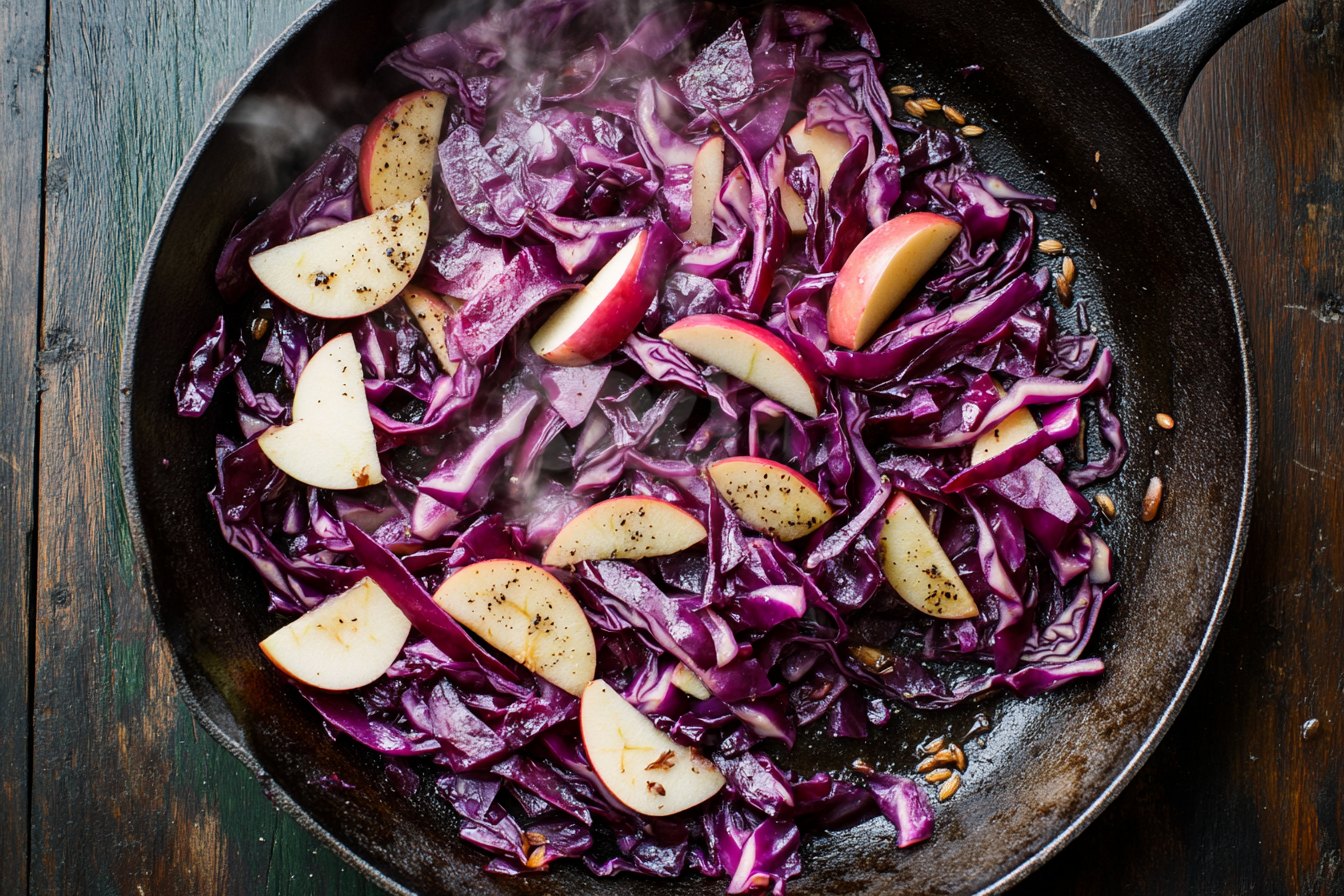
Heat the olive oil hard in the largest pan you own. Fry the onion and caraway for a minute, then add the cabbage and fry over high heat for three to four minutes, turning. The edges are allowed to go dark.
The cabbage piles up over the rim at first. After two minutes it collapses — until then, just keep turning.
Add the salt, turn the heat down to medium and cook for another eight to ten minutes, until the cabbage has collapsed and is tender but still has bite. No water, no lid.
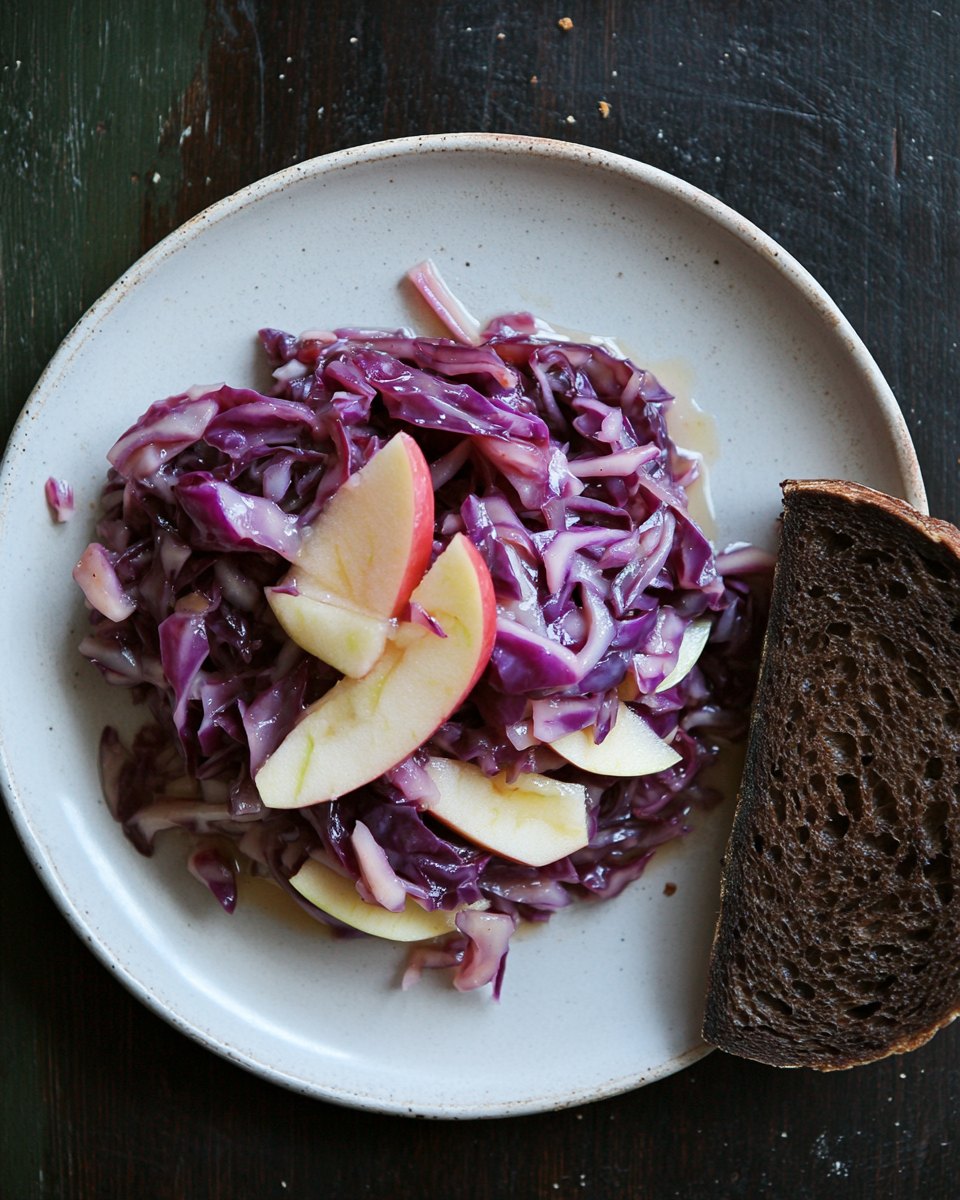
Fold in the apple wedges and cook for two minutes. They should warm through and soften at the edges without collapsing.
Only now add the cider vinegar and maple syrup, toss once firmly and season with black pepper.
This is the moment the colour jumps back from dull violet to a clear red. That is exactly why the vinegar comes last.
The most common mistake is the order, not the timing. Add the vinegar along with the cabbage — as many braising recipes tell you to — and twenty minutes later you still have tough strips, so you turn the heat up. That does not help: acid holds the cell walls firm. The second reason for tough red cabbage is a pan that is too small. Piled too high, the bottom layer steams in its own water while the top stays dry. Better to do two batches.